How much emergency fund do I need in Ireland?
A practical guide to calculating your emergency fund target in Ireland, including a worked EUR example, factors that change the right amount, and a starter-buffer approach for getting started.
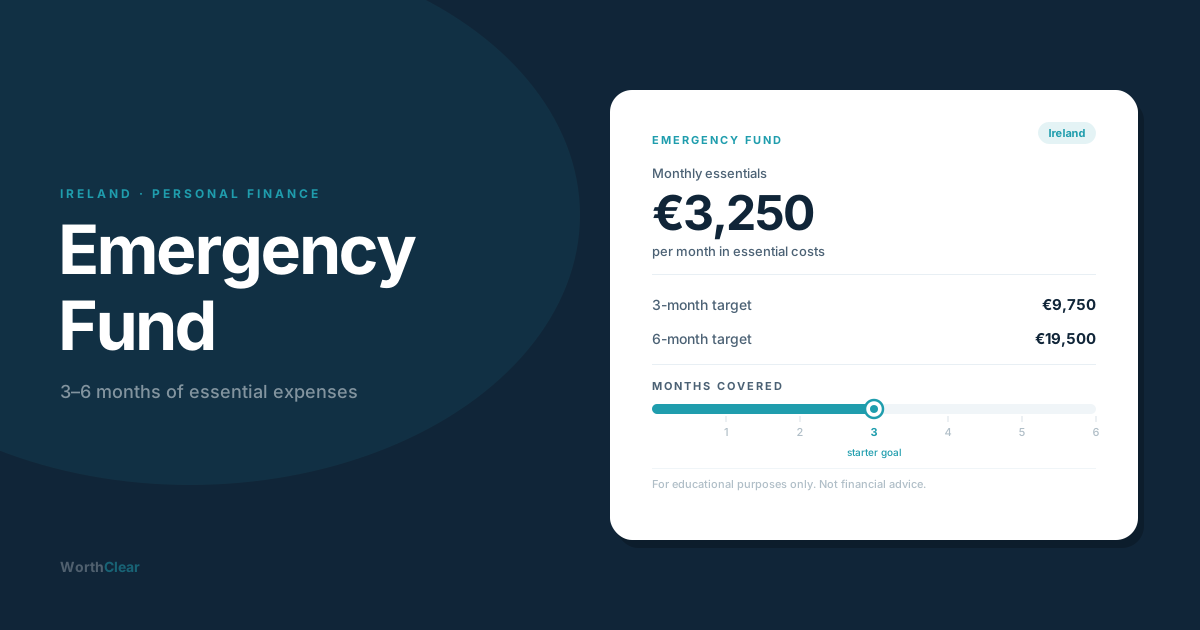
The most common advice, including from Ireland’s Competition and Consumer Protection Commission (CCPC), is to keep between three and six months of essential expenses in a savings account you can access quickly.
That’s a reasonable starting point. But it’s not a universal rule, and the number can look very different depending on your situation.
What are essential expenses?
Before you calculate anything, you need to figure out your monthly essentials. These are the costs that keep going no matter what happens. Bills you can’t pause if your income stopped tomorrow.
| Category | Examples |
|---|---|
| Housing | Rent or mortgage repayment |
| Food | Groceries (not dining out) |
| Utilities | Gas, electricity, broadband |
| Transport | Car insurance, fuel, or public transport pass |
| Insurance | Health, home, car, life |
| Debt repayments | Minimum required payments on any loans or credit cards |
| Childcare | If it’s a fixed cost needed for work |
| Phone | A basic plan |
The things that don’t count here: subscriptions, dining out, gym memberships, holidays. Your emergency fund is about covering the basics, not keeping your current lifestyle running.
The formula is simple:
Emergency fund target = essential monthly expenses × number of months
A worked example
Let’s say a couple is renting in an Irish city. One person is on PAYE, the other works part-time. No children.
| Essential expense | Monthly cost |
|---|---|
| Rent | €2,000 |
| Groceries | €420 |
| Utilities (gas, electricity, broadband) | €180 |
| Car insurance and fuel | €260 |
| Health insurance | €180 |
| Phone plans (two) | €80 |
| Minimum loan repayment | €130 |
| Total | €3,250 |
Based on €3,250 per month in essential costs:
- 3-month target: €9,750
- 6-month target: €19,500
Those are big numbers. I think that’s why a lot of people just don’t start. The full target feels too far away. But you don’t need to hit six months to be better off than you are today. More on that below.
What changes the right number for you
You probably need more (closer to 6 months or more) if:
- You’re self-employed or on a fixed-term contract
- Your income varies (seasonal work, commission, freelance)
- You have children or other people depending on you financially
- You’re renting (unexpected moves, deposit gaps, and tenancy issues add up)
- You have a variable-rate mortgage (your repayment can go up without warning)
- You have a known health condition that could mean unplanned costs
- You don’t have much savings elsewhere or easy access to credit
3 months might be enough if:
- You’re in a stable, permanent job with a reliable salary
- You have income protection or serious illness cover
- Your partner has a separate, stable income
- You own your home on a fixed-rate mortgage
- No dependants, and you’ve managed your finances consistently
One thing worth knowing about social welfare in Ireland
If you lose your job, you may qualify for Jobseeker’s Benefit, but only if you have enough PRSI contributions. As of 2025, the maximum payment is around €232 per week for a single person. You can check eligibility on Citizens Information.
That’s roughly €1,000 per month. For most households, that won’t cover the essentials, especially with today’s rent prices. So the State can help, but your emergency fund is still your first line of defence.
Start with a buffer, not the full target
The most useful thing I’ve learned about emergency funds: don’t wait until you have the “right” amount to start.
If the full target feels overwhelming, focus on a starter buffer of €1,000–€2,000 first. It won’t cover a job loss for six months, but it will cover the most common emergencies: a car repair, a broken boiler, a dental bill. That alone removes a lot of financial stress.
Once that’s in place, you build toward the full target over time.
Practical steps:
- Open a separate instant-access savings account. Keeping it separate makes it harder to spend casually.
- Set up an automatic transfer on payday. Even €50–€100 a month adds up. Don’t rely on remembering.
- Think of it as insurance, not savings. You’re not trying to maximise returns here. You need it stable and accessible.
- Top it up after you use it. Every time you dip into it, treat that as a signal to replenish.
Where to keep it
You want an instant-access or short-notice savings account, somewhere the money is available within a day or two, without penalty.
Avoid putting it in equities or anything that can lose value. Avoid anything locked for more than 60 days. The small interest difference is not worth the trade-off.
Frequently asked questions
How much emergency fund do I need in Ireland?
The standard guidance from the CCPC is 3–6 months of essential expenses. For a household with €3,250 per month in essential costs, that means a target of €9,750 to €19,500. Your personal target depends on your employment type, income stability, family situation, and whether you rent or own.
What counts as an essential expense?
Essential expenses are the costs that keep going if your income stopped: rent or mortgage, groceries, utilities, transport, insurance, minimum debt repayments, childcare if needed for work, and a basic phone. Subscriptions, dining out, and gym memberships are not essential.
Should I wait until I have the full amount?
No. Start with a €1,000–€2,000 starter buffer. It won’t cover a job loss for six months, but it will cover the most common emergencies — a car repair, a broken boiler, a dental bill — and remove a significant amount of financial stress.
Where should I keep my emergency fund?
In an instant-access savings account you can reach within one or two days, without penalty. Avoid equities, locked deposits, or notice periods longer than 60 days. The goal is stability and access, not return.
Does social welfare replace an emergency fund in Ireland?
Partly, but not enough for most households. Jobseeker’s Benefit pays approximately €232 per week — around €1,000 per month — for workers with sufficient PRSI contributions. For households with typical Irish rent levels, this won’t cover essential costs. Your emergency fund is your first line of defence; social welfare is a supplement.
This is not financial advice
This article is for general educational purposes. The numbers and approaches here are common guidelines, not personalised recommendations for your situation.
Your income, debts, family setup, insurance, and risk tolerance all matter. If you want advice specific to your situation, speak with a financial adviser authorised by the Central Bank of Ireland.
WorthClear is not a regulated financial adviser and doesn’t provide regulated financial advice.
Sources
- CCPC - Savings, Competition and Consumer Protection Commission
- Citizens Information - Jobseeker’s Benefit, Citizens Information Ireland
- Central Bank of Ireland — Register of Regulated Firms